Peter Benton Detwiler
April 17, 1944 – April 30, 2026
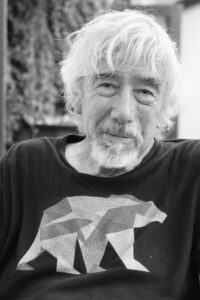
Peter Benton Detwiler, Professor Emeritus of Physiology & Biophysics at the University of Washington School of Medicine, passed away peacefully on April 30, 2026, in Prague, Czech Republic, where he had been living with his wife, Hana, and children Richenza and Torsten. He was 82 years old.
Peter was a scientist of rare depth and independence: rigorous, inventive, skeptical in the best sense, and almost entirely without self-promotion. His work helped shape the modern understanding of the retina, from how photoreceptors transform light into electrical signals to the organization of retinal circuits that compute the features of the visual world. To colleagues and trainees, he was equally memorable as a gifted teacher, a generous mentor, an artist, a builder, and a deeply kind human being.
Born in Stamford, Connecticut, Peter earned a B.S. in Biology from St. Lawrence University in 1966 and a Ph.D. in Pharmacology from Georgetown University in 1970. His distinguished postdoctoral training included positions at the National Institutes of Health and, most notably, a fellowship at Cambridge University’s Physiological Laboratory from 1975 to 1977, where he worked with Sir Alan Hodgkin, winner of the 1964 Nobel Prize in Physiology or Medicine.
In 1977, Peter joined the faculty of the University of Washington School of Medicine as an Assistant Professor in the Department of Physiology & Biophysics. He was promoted to Associate Professor in 1981 and to full Professor in 1986, a position he held until his retirement in 2022. Throughout his career at UW, Peter was one of the department’s most admired teachers. He received the University of Washington Distinguished Teaching Award in 1981 and additional Distinguished Teacher Awards from the University of Washington School of Medicine in 1983, 1986, and 1988. For many years he directed the medical physiology course, where students valued not only his command of physiology, but also his ability to make difficult concepts accessible, memorable, and alive.
Peter’s scientific contributions were broad, original, and persistent. With Alan Hodgkin and Peter McNaughton, he studied spread of electrical current in networks of turtle photoreceptors, including work published in Nature that revealed unexpected properties of coupled rod networks. At UW, he advanced electrophysiological approaches to intact and isolated rod photoreceptors and helped clarify how calcium feedback shapes phototransduction and light adaptation. His publications included influential work on retinal rods, recoverin-like calcium-binding proteins, guanylate cyclase-activating protein, rhodopsin inactivation, second-messenger signaling, and the relationship between retinal biochemistry and electrical response.
Later, Peter helped bring two-photon imaging into the study of intact retinal neurons. His collaboration with Winfried Denk and Thomas Euler contributed to the discovery that starburst amacrine-cell dendrites themselves compute direction selectivity, a finding that changed how neuroscientists thought about retinal motion detection and dendritic computation. Peter’s work was marked by a deep understanding of classical physiological experiments coupled to an inventive, technical imagination, repeatedly finding new ways to advance our understanding of fundamental mechanisms. Colleagues remembered Peter as “an excellent and critical scientist who was very modest about his own scientific discoveries” and “a gentle, modest, deep-thinking scientist, to whom people in the phototransduction field should feel indebted.” He was described as “a scientist’s scientist, no ambition just pure curiosity.” Peter asked exacting questions, but never to dominate a conversation. His criticism was clarifying rather than performative. He kept people honest, often with a quiet joke, a sideways observation, or a deceptively simple question that exposed the core of a problem.
Peter was also a beloved mentor. He provided his trainees room to think, encouraged their independence, and shared not only technical insight, but a view of science as a humane and disciplined way of life. His warmth was quiet but unmistakable. Friends described him as gentle, easy-going, kind, and warm-hearted; someone who excelled in science, art, and life without ever seeming to seek credit for doing so.
Beyond his scientific achievements, Peter was a Renaissance man who embodied both artistic creativity and practical skill. He assembled ancient machines into sculptures, personally rebuilt the houses he lived in with his own hands, and created an extraordinary portfolio of paintings many of which hang prominently in the homes of his colleagues and friends, a daily reminder of the same qualities that animated his science: attention, patience, craft, and an eye for hidden structure. He had a gift for the unusual and the offbeat, but also a reverence for beautiful, durable work—whether in physiology, art, tools, or conversation.
Peter is survived by his sister Susan, his first wife Anne Echols and their daughter Kristina and granddaughter Emma Grossman, his second wife Sharon Minami, and by his current wife Hana and their children Richenza and Torsten. He leaves a legacy of scientific discovery dedicated teaching, craftsmanship, and deep friendships across an international community of physiologists and neuroscientists. As a colleague wrote, quoting Hamlet: “We shall not look upon his like again.”